by David Andrew Wiebe | Aug 15, 2025 | Podcast
Podcast: Play in new window | Download
Subscribe: Apple Podcasts | Spotify | Amazon Music | iHeartRadio | JioSaavn | Podchaser | Podcast Index | TuneIn | Deezer | Youtube Music | | More
Have you ever felt like you’re spinning your wheels creatively, unable to move forward despite having talent and ideas? Do you find yourself surrounded by half-finished projects, unopened mail, and organizational chaos that somehow feels manageable but might actually be holding you back?
Perhaps you’ve dismissed the importance of “getting organized” as something that doesn’t really affect your creative output—after all, you know exactly where that important document is in the third pile from the left, halfway down.
In this practical and eye-opening episode of Creativity, Excitement, and Emotion, David explores the often-overlooked connection between tying up loose ends and creative breakthroughs.
Drawing from his current experience of managing a move, car repairs, client projects, and the concept of “vibrational escrow,” he reveals how uncompleted tasks and disorganization can literally block opportunities from flowing into your life.
Whether you’re struggling with creative blocks, feeling overwhelmed by commitments, or simply wondering why success feels elusive despite your efforts, this episode provides both the framework and motivation needed to clear the energetic and practical clutter that may be standing between you and your next breakthrough.
Sponsors:
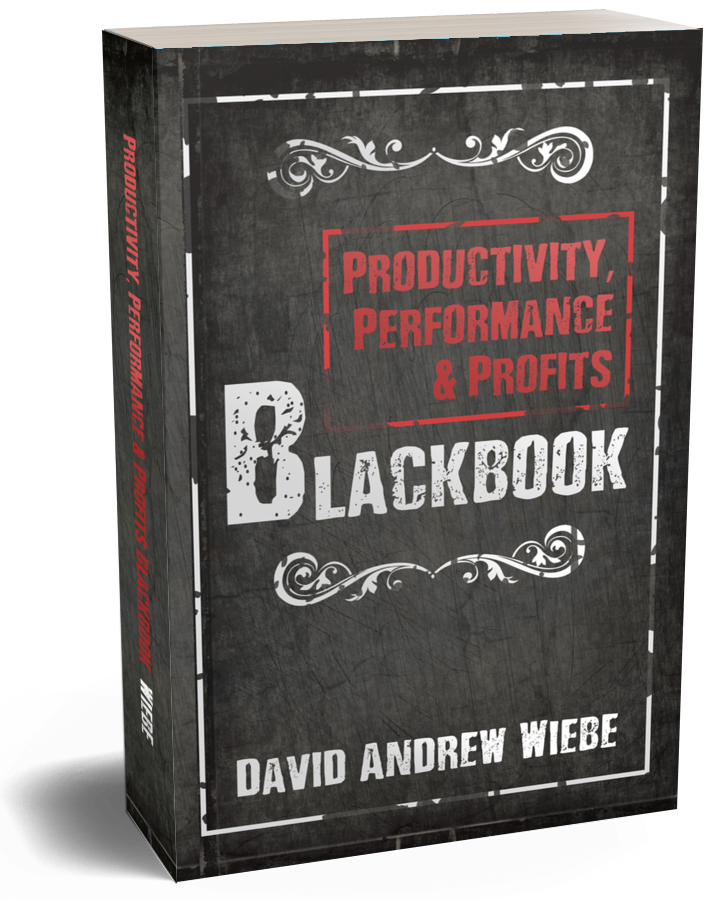
- Productivity, Performance & Profits Blackbook: Get a free copy of the “Definitive Guide to Productivity for Entrepreneurial Artists.”
- Get coaching: Stuck in your creative career? Not sure what to do next? Want to take things further? Book your personalized coaching session with David today.
Highlights:
00:17 – Tying up loose ends
01:23 – Why organization matters
03:40 – David’s current loose end inventory
10:00 – What David has learned and discovered on this journey
19:43 – Closing thoughts
Summary:
In this practical and revealing episode, David delves into the often-overlooked connection between organization and creative success. Through his personal experience of managing multiple loose ends—from car repairs to moving to client projects—he demonstrates how incomplete tasks and disorganization can actually block opportunities from manifesting in your creative career.
Key Themes & Takeaways
- The concept of “vibrational escrow” and how incomplete tasks block incoming opportunities
- Why top performers tend to be highly organized and how this affects creative output
- The mental clarity that comes from reducing commitments and completing projects
- How delegating to experts frees up creative energy for higher-value activities
- The surprising connection between physical organization and new opportunity flow
The Vibrational Escrow Principle
David introduces a compelling concept about how incomplete tasks affect our ability to receive new opportunities:
- The idea that certain things are “waiting for you” but require completion of current tasks to arrive
- How unfinished projects occupy mental space and block creative flow
- Why defining when something is “done” is crucial for moving forward
- The importance of unclogging your system to allow new opportunities to flow
“When you don’t flow things out, it does affect your ability to create, attract, and manifest what is already on its way… there’s things that are for you, waiting for you, and they’re gonna come to you at the right time, but that doesn’t mean you don’t have to do anything.”
This framework provides a compelling reason for addressing organizational challenges beyond simple productivity benefits.
David’s Current Loose Ends Inventory
To illustrate the principle, David shares his actual current list of items requiring completion:
- Car repairs and maintenance – delegating to automotive experts rather than ignoring warning signs
- Moving logistics – relocating within the Vancouver area with minimal possessions but strategic planning
- Furniture acquisition – purchasing only essentials (bed, desk, office chair) for the new space
- Current rental cleanup – hiring professional cleaners rather than doing it himself
- Project management – completing client work while passing some projects to qualified beginners
- File organization – addressing physical mail and documentation systems
- Accounting maintenance – implementing regular bookkeeping rather than annual rushes
This practical inventory demonstrates how even successful creators accumulate loose ends that require systematic attention.
The Expert Delegation Strategy
David emphasizes the importance of delegating tasks outside your zone of genius:
- Why hiring professional cleaners makes more sense than doing it yourself
- How automotive expertise prevents costly mistakes and ensures quality work
- The recognition that managing people may not be everyone’s entrepreneurial strength
- The value of identifying your weaknesses and finding others who excel in those areas
“I’m delegating responsibility to a capable expert… It’s generally not the best and highest use of my time and energy. And so, it is much better in the hands of an expert who I know is going to do a thorough job.”
This perspective helps creators focus their energy on activities that truly require their unique skills and talents.
The Organization-Opportunity Connection
Drawing from Dr. Robert Anthony’s work, David explores how physical organization correlates with professional opportunities:
- The claim that “top performers are always organized”
- How organizing and purging physical spaces can result in an inflow of new opportunities
- Why clearing your office, filing documents, or cleaning up digital spaces seems to create space for new possibilities
- The psychological and energetic effects of completing mundane tasks
“When you actually sit down and do that, it seems to make a difference. New opportunities start to flow in. So, if things are slow in your career, if things are slow in your business right now, and you’re looking for more inflow, clean up, tidy up, tie up loose ends.”
While acknowledging this might sound “crazy,” David validates the experiential reality many creators report when they address organizational backlogs.
The Mental Clarity Factor
David shares a powerful personal example about how reducing commitments improves creative thinking:
- His experience with home ownership becoming a mental burden that consumed creative energy
- How selling his house and moving to a more affordable basement suite created clarity
- The connection between financial stress and creative block
- How debt-free living enabled him to start writing books
“I had so much clarity of mind that didn’t exist before, and that made it possible for me to start writing books… what stressors do you have in your life that are keeping you from fully engaging in the projects you actually say you wanna do?”
This honest reflection demonstrates how external circumstances can either support or undermine creative capacity.
The Management Realization
David candidly admits to discovering a weakness in his entrepreneurial skill set:
- Recognition that he doesn’t enjoy managing people despite being promoted to team lead in his day job
- The difference between workplace management (structured, supported) and entrepreneurial management (independent, unstructured)
- Why micromanagement feels antithetical to his values and working style
- The importance of finding people who excel at people management to advance projects
“I realized a major weakness of myself, at least in an entrepreneurial capacity… managing people is not one of my strengths. And I especially hate micromanaging.”
This self-awareness helps explain why some highly capable creators struggle to scale their work beyond solo efforts.
Action Steps for Creators
For artists looking to apply these principles:
- Conduct an honest inventory of incomplete tasks and projects in your life
- Define clear completion criteria for each project to avoid endless mental loops
- Identify tasks that could be delegated to experts rather than handled personally
- Address financial and organizational stressors that may be consuming creative mental space
- Experiment with clearing physical and digital spaces to see if opportunities increase
- Recognize your entrepreneurial strengths and weaknesses to make better delegation decisions
The Systematic Approach
David concludes by emphasizing the importance of creating sustainable organizational habits:
- Moving from crisis-driven organization to consistent maintenance
- Finding integrated systems that handle multiple organizational needs (calendar, tasks, contacts)
- The importance of regular maintenance rather than annual organizational binges
- How small, consistent efforts prevent major organizational overhauls
Additional Context
This episode arrives during a period when many creators are reassessing their relationship with productivity and organization. Recent research from the Creative Professionals Institute shows that 78% of successful creatives maintain some form of regular organizational practice, though methods vary widely based on personality and working style.
The concept David explores aligns with growing interest in the connection between physical environment and creative output. Studies in environmental psychology suggest that cluttered or disorganized spaces can indeed impact cognitive load and creative thinking, providing scientific backing for the more esoteric claims about organization affecting opportunity flow.
Through practical examples and honest self-reflection, this episode provides both motivation and methodology for addressing the organizational aspects of creative careers that are often overlooked but may be more important than traditionally recognized.

by David Andrew Wiebe | Aug 1, 2025 | Podcast
Podcast: Play in new window | Download
Subscribe: Apple Podcasts | Spotify | Amazon Music | iHeartRadio | JioSaavn | Podchaser | Podcast Index | TuneIn | Deezer | Youtube Music | | More
Have you ever felt like you’ve been pushing and striving for opportunities in your creative career, only to find that your biggest breakthroughs came when you weren’t actively chasing them? Do you sometimes struggle to recognize your own accomplishments because you’re so focused on what you haven’t achieved yet?
Perhaps you’ve wondered why some artists seem to effortlessly attract the right opportunities while others work tirelessly with little to show for it.
In this deeply reflective episode of Creativity Excitement Emotion, David shares how music is unexpectedly making a comeback in his life, not through force or relentless pursuit, but by choosing him when the conditions were finally right.
Drawing from his journey of building financial stability through his tech contract and growing Spark Infinity to nearly 2,000 members, he explores the crucial difference between opportunities you chase and those that find you when you’re ready.
Through honest reassessment of his previous music career and practical insights about finding mentors who’ve already achieved what you want, David offers both validations for non-linear creative paths and actionable guidance for recognizing success when it’s staring you in the face.
Sponsors:
- Productivity, Performance & Profits Blackbook: Get a free copy of the “Definitive Guide to Productivity for Entrepreneurial Artists.”
- BUMP Global TV: Want to join a growing network of heart-centered entrepreneurs exploring and creating new opportunities together? Check out BUMP.
- Get coaching: Stuck in your creative career? Not sure what to do next? Want to take things further? Book your personalized coaching session with David today.
Highlights:
00:17 – Documenting the journey
00:53 – Hard lesson learned
03:19 – Being chosen
04:41 – Reflecting on a music career that was buried in a shallow grave
08:47 – The revival of a music career
14:24 – Tying up loose ends
16:54 – Excited for what’s to come
18:10 – Recognizing your successes
21:23 – One step you can take to shortcut years of anguish
Summary:
In this reflective episode, David shares how music is unexpectedly making a comeback in his life, arriving not through force or planning but by choosing him.
Through candid self-assessment, he explores the lessons learned from his previous music career, the importance of recognizing actual accomplishments amid failures, and why finding mentors who’ve already achieved what you want is crucial for avoiding years of guessing and reverse-engineering.
Key Themes & Takeaways
- The difference between forcing projects and allowing opportunities to choose you
- How financial stability and having a home base enable better decision-making about creative opportunities
- The importance of taking a “sober” view of past accomplishments rather than dwelling on perceived failures
- Why skipping the step of finding mentors or proven methods leads to years of inefficient guessing
- The reality that success comes from what you do with failures, not from avoiding them entirely
The Foundation Lesson
David begins by reinforcing a crucial life lesson learned through a difficult experience:
- The necessity of having both a home base and financial stability for life to function well
- How his current big tech contract and Spark Infinity success provide the foundation for better choices
- The distinction between people who can thrive as nomads (with family safety nets) versus those who need more stability
- Why some people require different structural supports to be creative and productive
“If I don’t have a place to call home, and if I don’t have some kind of financial stability… my life tends to spiral out of control. And for some people, I’m telling you, that’s not the case… But I think what I’ve learned for myself… is if there’s no home to go back to and my financial life is variable at best, things do tend to spiral out of control.”
This foundational insight provides context for understanding how different people require different conditions to thrive creatively.
Things Choosing You vs. You Choosing Things
David explores a fascinating shift in how opportunities have been presenting themselves:
- The contrast between actively choosing projects that didn’t work out and being chosen by opportunities that flourished
- How the big tech contract and Spark Infinity both “chose” him rather than being pursued
- The growth of Spark Infinity from 4-5 members to over 1,900 in seven months
- Why sometimes the best opportunities come when you’re not actively seeking them
“In the last year and a half or so, really what I’ve noticed is instead of me choosing things, things are choosing me… the things I’ve chosen didn’t necessarily go anywhere or didn’t do that well… what I can say about things that have chosen me that have worked well is, of course, the big tech contract and Spark Infinity.”
This observation challenges the conventional wisdom about always being proactive in pursuit of opportunities.
The Music Career Perspective Shift
David offers a remarkably honest reassessment of his previous music career:
- Playing over 300 shows and becoming an award-winning composer
- The tendency to belittle past accomplishments while focusing on unmet goals
- Recognition that the career was “humble” and “not glamorous” but still substantial
- What he would have done differently, particularly regarding recording and releasing more music
“Looking back, like having played over 300 shows and having become an award-winning composer and some of the other accomplishments that I’ve been able to cultivate to this point, I realize it is just altogether too easy to not see things for what they are and not look at it from… a sober point of view.”
This honest assessment demonstrates the importance of recognizing actual achievements rather than measuring everything against unrealistic expectations.
The Unexpected Musical Revival
Music is now re-entering David’s life in unexpected ways:
- Multiple people asking about his current musical activities
- New project opportunities involving music composition with good compensation
- The natural evolution from “maybe I’ll try this” to concrete opportunities appearing
- How this arrival feels timely despite being unplanned
“What has been popping up in my life is some good opportunities… I began work on a project involving writing and music… I think the compensation is very good. And especially based on a lot of other projects I’ve worked on along the way… I’m clearly at a different time or different space in my career, a different season in my career right now.”
This section illustrates how careers can have multiple chapters and how opportunities often arrive when foundation and readiness align.
The Success Recognition Challenge
David identifies a crucial pattern in how people relate to their own accomplishments:
- The tendency to focus on failures while overlooking actual successes
- His own community-building track record: contributing to a 22,000-member Facebook page, co-founding another with 1,900+ likes, and growing Spark Infinity to 1,900+ members in seven months
- How this pattern of dwelling on failures while ignoring successes create unnecessary discouragement
- The importance of taking inventory of what has actually worked
“I am continually amazed by the things that I’ve actually accomplished when I take a sobering look at it… one of the things I can see from that is I actually am a good community builder. Although again, there were some experiments and there were some failures… And it’s so easy to dwell on those versus recognizing the successes you actually have.”
This insight provides valuable perspective for creators who may be undervaluing their own track records.
The Method-Finding Imperative
Perhaps the most actionable insight in the episode concerns the importance of finding proven methods:
- Why trying to reverse-engineer successful people’s strategies leads to years of inefficient guessing
- The crucial step of finding mentors, courses, or coaches who have already achieved what you want
- How this applies across all areas: marriage, artistic careers, business development
- The distinction between building foundations (2-5 years) and achieving long-term success (10-30 years)
“Don’t skip that step. Really, truly, because if you do that, you can be guided in the right direction, gain momentum, find success in a way that you might not otherwise… without the method, you’re just guessing, you’re trying to reverse engineer what someone else has done.”
This practical advice addresses one of the most common mistakes creative entrepreneurs make.
Action Steps for Creators
For artists navigating their own career development:
- Take an honest inventory of your actual accomplishments rather than focusing solely on unmet goals
- Create stability in basic life areas (home, finances) to enable better creative decision-making
- Remain open to opportunities that choose you rather than only pursuing what you think you want
- Find mentors or proven methods before attempting to reverse-engineer success
- Recognize that success often comes from how you handle failures, not from avoiding them
- Be prepared to recognize and act on opportunities when they arrive
Looking Forward
David concludes with practical considerations about managing current commitments while embracing new opportunities:
- The need to complete or pass on existing projects to make room for music opportunities
- The excitement of discovering that there are still things left to accomplish in music
- The better reward-to-effort ratio that comes with experience and timing
- Preparation for recognizing and acting on success when it arrives
Additional Context
This episode arrives during a period when many creative professionals are experiencing career pivots and unexpected opportunities emerging from years of foundation-building. Recent studies show that artists who maintain financial stability through diversified income sources are 2.3 times more likely to pursue passion projects successfully than those operating from scarcity.
The concept of opportunities “choosing” creators rather than being pursued reflects broader discussions about timing, readiness, and the intersection of preparation with opportunity. David’s experience mirrors research showing that sustainable creative careers often involve multiple phases, with later chapters building on earlier foundation work in unexpected ways.
Through honest self-reflection and practical insights, this episode provides both validation for creators whose careers haven’t followed linear paths and actionable guidance for recognizing and embracing unexpected opportunities when they arise.