Content marketing is an amazing way to build your music career or drive business.
Unfortunately, it’s easier to fail in your content marketing efforts than it is to succeed, especially if you don’t have a defined plan.
In this episode of The New Music Industry Podcast, I share several things that holds people back from getting the kinds of results they’re looking for from their content marketing efforts.
Content marketing is a strategic marketing approach focused on creating and distributing valuable, relevant, and consistent content to attract and retain a clearly defined audience – and, ultimately, to drive profitable customer actions.
If you’re creating YouTube videos on a weekly basis to attract an audience for your music, you’re leveraging content marketing.
If you’re podcasting to build an audience of musicians and music entrepreneurs like I am, you’re leveraging content marketing.
If you’re publishing daily articles to drive traffic to your website like Soundfly is, you’re leveraging content marketing. You can hear Ian Temple talk about this in episode 80 of the podcast.
Content marketing is effective. But over the years, I’ve seen plenty of people fail at it, or arbitrarily put a stop to their initiative because they don’t see an immediate payoff.
That’s actually the first issue I want to address:
Content marketing requires a long-term mindset.
Frequently adding valuable content to your site can help you get more organic traffic. If you’re serious about search engine optimization, then you simply can’t ignore the importance of creating content.
But for better or for worse, whatever actions you take to optimize your site today probably won’t produce results for six to 12 months.
I’ve only seen this work two ways:
Publishing on a regular schedule. It can be tough coming up with content ideas and creating something new every day, three days a week, once a week, or whatever the frequency. But if you treat every content piece like an experiment and track which of your experiments bear fruit six to 12 months down the line, you can get a good sense of what type of content attracts your audience and create more of it.
Publishing quality content sporadically. This strategy seems to work well for people like SEO expert Brian Dean. He doesn’t publish all the time, but when he does, he puts out posts that are jam-packed with a ton of value. He spends a lot of time researching keywords and ideas before he even dedicates time to writing the post. Then, he proceeds to market these posts with every bit of enthusiasm he can muster. That’s a key point.
Meanwhile, I’ve seen some people take a third approach, and I have yet to see this work. They stop and go, rinse and repeat. They publish a few pieces, try to measure their effectiveness, and then pause while they assess whether what they published worked.
Inevitably, these people get left in the dust because there are plenty of other people publishing valuable content on a more frequent basis.
Now, don’t get me wrong – I do believe in getting every bit of leverage out of a content piece. But unless you’re producing at the level that someone like Brian Dean is, you’re not going to impress anyone with your 300-word blog posts.
You must find your balance. If you’re going to be publishing frequently, you’re probably not going to be spending as much time researching, distributing, and marketing your content. But it’s like chipping away at a piece of granite. Every piece of content you publish can help you move toward your goals of attracting an audience and selling to them.
If you’re going to be publishing less frequently, then you should be spending more time in research. And, because you’re going to be spending a lot of time writing, you don’t want that piece of content to go to waste. You should also spend a lot of time distributing and marketing it.
Stopping and going does nothing whether you look at it from the perspective of your audience, or the perspective of search engines. If you’re only going to be sharing bit pieces, your audience is going to want to hear from you more frequently. There’s nothing wrong with snackable content, but you must publish a lot of it to keep that traffic coming in. This will also send a signal to search engines that you’re creating something worthwhile.
I believe in creating quality content. But I’m not obsessive. I believe Seth Godin was right when he said, “just ship it”. Once something is out in the world, you can get feedback and gauge people’s response to it. So long as it’s sitting on your hard drive and you keep tweaking it, you’re wasting a lot of time that could potentially be better allocated.
Okay, I admit. I’m voicing one of my frustrations as a ghostwriter here.
Businesses and entrepreneurs tend to hire ghostwriters because:
They don’t have time to write their own content.
They don’t view publishing content as a high value task.
They don’t enjoy writing, or they aren’t very good at it.
A combination of the above.
Unfortunately, people hiring ghostwriters tend to have a lot of unrealistic expectations around what a ghostwriter can offer.
You must realize that a ghostwriter tends to have many clients, not just one. So, if you want their full, undivided attention, you should consider hiring them full-time.
Why is this an issue? Because many entrepreneurs and businesses want perfect content.
What does “perfect” mean? Well, it’s entirely subjective of course.
Most people would consider things like:
Grammar
Spelling
Voice or tone
But there can be a myriad of other factors often not considered by people hiring ghostwriters.
You might have certain regulations you need them to adhere to. You might require the ghostwriter use certain industry jargon or terminology. Or, you might even need the ghostwriter to follow your style guide.
But you’d be amazed at how many businesses don’t have a style guide, and when they do, it’s so long and detailed no one could possibly absorb it in a few tries. It can take ghostwriters awhile to sus out one’s exact needs.
But again, I must also go back to what I said earlier. Assuming the ghostwriter is working with many clients, their attention is going to be divided among them. And, if they’re getting paid the same across the board, there’s simply no way for them to prioritize your project over others.
Can you see how this would put a serious damper on how much content one could publish in a given timeframe?
Certainly, you don’t want to put out subpar content. But you also shouldn’t take forever putting together something that may not even be read, heard, or viewed by your audience. You could spend hours, days, weeks, months, even years on it, and when you finally publish it, there’s no guarantee it will get a response.
Now you know why an editorial calendar and deadlines are amazing tools. If you know you must create another video by next week, you’ll find a way to put it all together – even if you must cut a few corners or simplify the concept to achieve the desired result.
I once interviewed Jack Conte. He told me that one of the obstacles he had to overcome was letting go of perfectionism and publishing songs when they weren’t finished.
I don’t see the word “perfection” in Content Marketing Institute’s definition of content marketing. I do see the words “valuable”, “relevant”, and “consistent” though, and that should be your goal.
If there’s anything else to add, it would be this…
Content marketing requires strategy.
What are your goals? What do you hope to achieve with content marketing? How do you plan to reach those goals?
I can only assume that a lot of people stop and go because they don’t have a strategy and they’re constantly second guessing themselves.
So, they try writing 300-word blog posts for a week.
Then, they try their hand at podcasting but quit after a month.
Then, they sporadically publish videos for the next four months.
Now, I’m all for experimentation. But if this is how you’re approaching content marketing, I can tell you right now Kim Kardashian is more organized than you are. Just look at her Instagram feed.
At The Music Entrepreneur HQ, we publish blog posts on Tuesday, podcast episodes on Thursday, and weekly digests on Friday.
This is always subject to review, and sometimes we publish more, sometimes we publish less. But as a basic guideline for what to achieve each week, it works.
Our content is geared towards musicians and music entrepreneurs.
We believe in simplifying difficult concepts and explaining them in plain language.
We believe in helping artists think outside the box.
We believe in empowering artists and in helping them adopt a strong mindset. If you can get your thinking right, a lot of other things tend to fall into place.
This is a general overview of our content strategy. So, what’s your content strategy? Do you have a plan? Do you know who you’re trying to talk to and appeal to? What is your publishing schedule? What type of content are you creating to attract your target audience?
Thinking about these questions will help you turn your thoughts and ideas into a concrete strategy that can produce results.
And, if it doesn’t produce the kinds of results you’re looking for, you adjust your approach and try again.
Per CMI, content marketing is about consistent content, so consistency is of the essence. Don’t stop and go. Don’t wait for perfection. Do create a written plan. Then, execute, execute, execute.
Welcome back, friend!This guest post comes to us via Ellie Batchiyska. If you’re recording for the first time, you’ll love the suggested gear mentioned below.
Also note: This post contains links to affiliate products. If you purchase through these links, we will earn a small commission at no additional cost to you.
Now, let’s get into it!
The lyrics are written, the band is gathered, the sound has been established, but wait – you don’t have all the professional equipment you need to get your debut album sounding up to snuff.
Naturally, as a beginner band, you’re on a budget. However, you need the essentials: microphones, amps, recording equipment.
Unfortunately, none of those things are cheap. The good news is we’ve made the frugal findings for you and compiled them all into a tidy list.
Here are five pieces of equipment you absolutely need in to begin the recording process, narrowed down to the most affordable yet quality items in each category.
1. Prep with a Preamp
Think of the pre-amplifier as your central hub for low-level signals, sounds, and inputs. Maybe it’s not the sexiest piece of equipment in your studio, but it is possibly the most basic and crucial. It boosts weak signals from microphones or instruments before processing them through a power amplifier or loudspeaker.
Most importantly, it cleans up these weak signals, allowing for a crisper and cleaner overall sound quality.
Due to its elemental purpose, the preamp is possibly the priciest item on this list.
However, you can get a PreSonus DigiMax D8 Eight-Channel Preamp with 48 kHz ADAT Output for just $399 on Amazon, probably the most affordable preamp on the market right now, unless you buy one secondhand.
2. Get Crankin’ with a Guitar Amp
Decent amps at a reasonable price are hard to come by. On the one hand, you want your electric guitar to sound loud and clear, but on the other, you’re not willing to give up an arm and a leg for the tone.
Fortunately, with the Bugera V5 Infinium, you don’t have to spend more than $200. This simple tube amp is compact and great for a small makeshift studio space.
With a couple of modifications and tube replacements, it can even sound like a $500 piece of equipment. This amp is dually useful: powerful enough for studio recording, yet compact enough for carrying around to live gigs.
3. Microphone Mania
A microphone is not only an important element for picking up vocals, but for picking up instruments when there’s no room in the budget for a decent amp.
With that, you want to make sure to buy a mic that simultaneously enhances input and drowns out excessive background noise.
Durable, dynamic, and industry-approved, the Shure SM57-LC Cardioid Dynamic microphone is a knockout at just $99. Despite its primary use for vocals, this mic is renowned for its pickup of percussion, wind, and string instruments as well.
4. Makin’ Headway with Some Headphones
Why splurge on Beats or Bose when you can get comparable sound quality at a non-comparable price? And we mean non-comparable in a good way.
The Prestige Series SR60e headphones are only $79 and reviews boast that their ability to pick up upper mids/highs and bass is exceptional.
Lightweight, retro, and practical, these are great for ensuring you pick up the most realistic sound of your music in post-production.
5. And Finally, a DAW
Though not a tangible piece of equipment, the recording process is not complete without music production software. Depending on your needs, standards, and computer, there are numerous programs you can use.
For Mac users who love taking advantage of their extensive apps and features, GarageBand is a failsafe option. This free program either comes pre-installed on your Mac or can easily be downloaded from the app store.
Within the program, you have access to a complete sound library, where you can fill in missing pieces from your recording session with pre-recorded instrumental snippets. Guitar/voice presets, along with the ability to plug in equipment directly for recording (such as a USB keyboard), make it almost unbelievable that this program is available at little to no cost.
For a slightly more professional program at a still nominal price, Avid’s Pro Tools offers an impressive array of functions. It is available for Windows and Mac, and allows users to collaborate remotely on projects, access a sound library with thousands of sounds and 60 instruments, and even surround sound capabilities.
At just $25/month, Pro Tools can be especially useful to bands that don’t have high-quality equipment, as its sophisticated interface allows you to edit almost anything to perfection.
Now That You’ve Got the Gear…
Get recording! When you save money on your equipment, you give yourself the ability to invest in promotional materials, live shows, and a recording space.
Bobby Gillespie may have preached that a band is only as good as its drummer, but the truth is that they’re only as good as their gear. After all, what’s the point of sounding phenomenal live if you can’t get that sound across in recordings?
Start small with these must-haves and then get ready to work your way up once they begin to pay off, which they will.
00:43 – Why I put together inspirational content for the New Year each year
00:59 – Each post that was created to help you find your footing in 2018
01:51 – A recap of the New Year posts
02:01 – 2018
02:34 – Setting Your Defaults
03:08 – The Fewer The Options, The Better
03:36 – Closing the Chapter on 2017
04:02 – Reflecting on My 3 Theme Words from 2017
04:32 – What Did I Accomplish in 2017?
05:30 – 10 Things I Did in 2017
06:01 – 4 Impacting Books I Read in 2017
06:48 – How to Determine a Focus for Your Music Entrepreneurship Career
07:26 – Top 10 The Music Entrepreneur HQ Posts in 2017
07:45 – Were you inspired by any of this content?
09:00 – New resource
Transcription:
Well, it has taken a while for me to get through the New Year content here in 2018, but I hope you’ve enjoyed what I’ve had to share with you to this point. This podcast episode is the last in the series.
It’s already May as I’m putting this episode together, and it may be June by the time I finally get around to publishing it. My plan wasn’t necessarily for it to take this long but I had a lot of interview requests and thought it would be a shame to put off publishing the great conversations I was having.
I always like to front-load the year with a dose of inspiration, because it’s usually the time when we begin thinking about setting goals and what we’d like to accomplish in the New Year. There’s a natural rhythm to the year, and going with the flow keeps you moving forward at a faster rate.
I’m going to take a moment to mention each post that was created to help you find your footing in 2018, and these posts will be linked up in the show notes of this episode:
I would love to hear your thoughts on each of these posts. In case you missed these, here’s an overview of what I talked about in these posts and podcast episodes:
2018
In this post, I shared what I believe is going to happen in 2018 from a spiritual perspective, as well as what’s in store for The Music Entrepreneur HQ. I’ve already made some adjustments around what I’m working on and what I’m looking to accomplish, but I would say I’m happy with the progress I’ve been making.
Making predictions is kind of fun, and even if you aren’t right, people tend to enjoy reading what you have to say about things to come. I think what I said about 2018 in this post is valid, but you’d have to read it for yourself to see if it resonates with you.
076 – Setting Your Defaults
While I do believe in the power of creating and sticking to a routine, it takes considerable discipline. Though I always get a lot done, I haven’t had much success with keeping a regular routine in the last year or so.
So, here’s a different way of thinking about planning and scheduling. Setting your defaults helps you eliminate the energy you might otherwise expend on determining what to do with your time daily. If you have a predetermined default for your day or for specific time blocks in your schedule, decision making becomes much easier.
077 – The Fewer The Options, The Better
Your desktop workstation isn’t set up. You’re in the process of moving, and your belongings are spread across your previous residence and your new residence. Although you have a laptop or two lying about, you can’t access the internet. What do you do?
The answer is simple – you focus!
In this podcast episode, I share why it’s better to limit your options than it is to be distracted by the millions of options starting back at you.
078 – Closing the Chapter on 2017
I agree fully with leadership mentor Michael Hyatt – if you fail to process the year you’ve just experienced, you’ll end up carrying that baggage into the New Year. That stops you from taking full advantage of the clean slate.
This podcast episode shows the process he and I use to jettison any baggage we might be carrying into the New Year before embarking upon new adventures.
079 – Reflecting on My 3 Theme Words from 2017
I like Chris Brogan’s theme word idea. Every year, he sets three theme words for the year.
As with routine, goal-setting isn’t my strong suit. But if I set an intention for the year, things start to show up and experiences begin to manifest in unpredictable and incredible ways.
So, every year, I share my theme words and what happened as results of setting an intention. Some amazing things happened last year to say the least.
081 – What Did I Accomplish in 2017?
This was another reflection I did, mainly because I felt I achieved a big goal in 2016 but wasn’t sure I had grown or advanced my goals in 2017.
As I reflected, I realized I had. And, I also affirmed the importance of taking breaks. In the entrepreneurial culture, long hours at the office are worn like a badge of honor. Unfortunately, this has a way of getting us thinking we must be productive every waking moment. Andrew Galucki and I talked about this in episode 91 of the podcast.
But I don’t think it works that way. Like a lumberjack, we must spend time sharpening our saws before going to log. That allows you to cut down more trees, not fewer.
As you lose sleep, work long hours, forget to meditate, exercise and eat healthy, your body deteriorates, and you begin to burn out. So, regular breaks allow you time to recover and reflect on where you’re going. This also helps you identify any adjustments you might need to make.
083 – 10 Things I Did in 2017
What did I do in 2017?
I thought this might prove an interesting reflection. It would help me see how my career was progressing and could also offer some insight into what you could be doing to make the most of your music entrepreneurship career.
I don’t necessarily want to give you the impression that being a music entrepreneur is about how many things you can do at the same time. But you might be able to identify one thing from the list that you’d like to pursue with everything you’ve got.
084 – 4 Impacting Books I Read in 2017
In 2015 and 2016, I was successful in reading 52 books or more – one book for every week in the year.
I let this habit go in 2017. I still love to read, and I will keep exploring more books in the future, but I think I learned something valuable as result of cutting down on the constant consumption of information.
As my business coach James Schramko says, he has good filters around what to consume and not to consume.
I’ve begun to realize there’s limited value in constantly researching different topics. Certainly, it’s important to keep an eye on what’s happening in your industry, but this doesn’t need to be your top priority.
When you spend less time consuming, you can spend more time creating. That’s the key point.
090 – How to Determine a Focus for Your Music Entrepreneurship Career
How do you determine a focus for your music entrepreneurship career?
In this episode of the podcast, I shared a few ideas around what filters to use to decide on a viable direction for your career.
Perhaps, based on things you’re already doing, you could identify a few winners to focus on and cut off the losers that just aren’t working.
Such objective thinking can be difficult when you’re attached to an idea, but maybe you could set aside a small amount of time in your schedule to work on side projects while you maintain focus on the key products and services that generate income.
093 – Top 10 The Music Entrepreneur HQ Posts of 2017
And, of course, I looked at what content fared the best on The Music Entrepreneur HQ in 2017. Perhaps this could offer some ideas around the types of content you could be creating, or help you come up with ideas for guest posts you could write for us.
My question for you is:
Were you inspired by some or all this content, and if so, did you stay inspired? Did you set any new goals? Did you complete any big projects? How are things coming along? It’s never a bad idea to check in mid-year and assess your progress.
As for me, to this point, I’ve launched two new products. I’m basically launching at a rate of one new product every two months, which I think is a great pace and I’m hoping to keep to that.
And, I’ve affirmed something important: You guys seem to respond more to books than other types of products I’ve created, like eBooks and courses. Maybe this is unique to my audience. Or, maybe all this talk about books on The Music Entrepreneur HQ already has you predisposed towards buying books.
In episode 81 of the podcast, I talked about the fact that I’ve achieved more clarity around what I’m doing at The Music Entrepreneur HQ. I recently reaffirmed this direction.
This was important to me, because I was thinking about expanding in different directions and testing a lot of products and services. What I gradually realized was that I have three business units, and I need to separate them as such. One of these businesses is being built with the idea of selling it in mind.
But I digress.
I wanted to do a quick recap of the New Year content because I’ve been putting together a new resource to share with you.
The question is:
Would you be interested in a book that could help you start your year the right way?
If I’m being perfectly honest, this book is at least halfway done, so I may go ahead and publish it anyway, perhaps at a more strategic time, like December or January.
But I’d still love to hear what you think about a project like this.
So, I’m going to encourage you to go to davidandrewwiebe.com, look for episode 94, and type “Yes” in the comments section if you’re interested.
Now, let’s discover what Perry has to say about what and what not to do in the studio!
Most recording sessions go well. Once in a while they crash and burn. Usually it’s not the studio’s fault.
The artist carries the biggest burden of a poor recording session. It’s their music. Nobody cares where the record was made. They’ll listen to the music (particularly the vocal) and immediately pass judgment on it.
But if you avoid these five mistakes you have a good chance of making a good recording:
1. Not Preparing
It may sound cliché, but it happens all the time! An artist comes in with no idea what they are about to do. It’s common with rappers. They’ll come in and write their lyrics in the studio, all while paying $50 per hour. Sure, I’ll take their money, but an artist like that is only good for a session or two. They’ll get frustrated with how little they achieve in the studio and burn out.
One exception to the rule may be guitar solos. I’ve seen beautiful guitar solos get crafted in the studio on the spot. However, I’ve also seen guitar players get frustrated and nervous trying to improvise.
You need to know what kind of a musician you are. Are you spontaneous and in the moment or are you deliberate and intentional? The most important thing is to prepare your state of mind for the studio.
2. Not Being in the Right State of Mind
I meditate every day, twice a day. While meditation may not be your thing, implementing some sort of ritual into your day helps get you into the right state of mind for recording.
For you it might be exercise or maybe just sitting in a coffee shop for 10 minutes without looking at your phone. I use visualization so much that I don’t even realize I’m doing it. I’ll just be daydreaming of the session and see myself nailing all the parts.
Visualization will backfire on you if it’s not positive though. Once I had to audition for a band and I was so anxious that all I could see was it crashing and burning. When I finally did the audition, I was too stiff and it didn’t go well. Needless to say, I didn’t get the gig. Your mind is powerful. Make sure you thoughts about recording are positive.
Some bands can get away with this. The Rolling Stones had unlimited budgets. Jim Morrison had talent that oozed out of him – sober or high. But most of us are pathetic when we’re drunk.
You’ve saved long and hard for this recording session, so make the most out of it. Playing drunk or high is sloppy. Recording sessions can be long. You’ll need sustained energy.
Have teas, juice and water in the studio. Have a beer when you’ve wrapped for the day. Or skip the beer if you’re coming in the next day too. You need to be fresh and give your all to your recording. Influence your band mates to do the same.
4. Eating Poorly
Pizza is the number one studio food. I love a good pizza, but I also like to stay awake for my recording sessions. Pizza and other fast foods make most people sleepy and grumpy.
Think ahead about food that will give you energy. Good nutrition to keep your body and brain sustained and hydrated will be a valuable asset in the studio. The way you feel during your takes will be reflected in the sound.
Remember you all have to share the studio bathroom for a couple of days too, so try not to make a nuclear wasteland of it.
5. Ego
This depends on where you are in the music business. If you’re recording a massive record for a huge label and your worldwide reputation is at stake (you’re probably not reading this anyway) then you may have some reason for being a massive prick.
But if you’re making a local record for yourself and your 20 YouTube followers, you need to settle down a little bit. Listen to the advice of the studio engineer. You may be a star one day, but for now, you’re just you. The way you treat people on your way to the top matters – because these are the people who can help you get there. So have fun and keep your ego in check.
Bonus Tip: Don’t Distract the Engineer!
I’ve been in many sessions where the whole band is talking in the control room while the engineer and another musician are trying to get a take. Sometimes the engineer is mixing a song while the whole band is having a party.
He might not say anything, but you can be sure he is annoyed as hell. So keep talking to a minimum in the control room when recording is happening. When it’s your turn to record, you’ll appreciate it.
04:41 – Ari Herstand’s Song or Album Release Checklist
05:15 – How to Become a More Confident Musician & Living the Entrepreneurial Life
05:58 – 6 Impacting Books I Read in 2016
06:22 – What was your favorite post from 2017?
Transcription:
Each year, we publish a lot of content at The Music Entrepreneur HQ.
But there are always a few posts that stand out among the 100 or more posts that go live on a yearly basis.
This is because the subject matter of these posts resonates with you in a way that other pieces simply don’t, or because you derived greater value from them.
2017 was no exception – certain posts had greater reach than others, and in this podcast episode, I’m going to highlight the top 10 posts from 2017.
I had a feeling this post would catch on, even as I was writing it. Compared to other industries, it seems like there isn’t as much transparency in the music industry, making relevant stats harder to find.
When I was researching and putting together this content, I knew that I wanted to turn it into an infographic, something I finally did here in 2018.
If you haven’t seen the infographic yet, it’s worth revisiting this post just to have a look.
Based on the popularity of this post and some coaching requests I’ve had, I’m thinking about creating a course on affiliate marketing.
Since affiliate marketing involves promoting a product you didn’t have to create and earning commissions on it, there are a near limitless number of opportunities to explore.
I believe it’s a revenue stream many musicians and music entrepreneurs aren’t thinking about, so that alone makes it a topic worth covering in more detail.
I’d also like to prompt you to check out episode 89 of the podcast with Brian Poillucci of EVO Band Apps, as you might be interested in leveraging his app to create your affiliate income.
There was a contract writer I’d hired to put this post together, and she clearly did a great job.
The topic of money isn’t always one artists like to broach, because it tends to be a personal and sensitive matter, but it’s clearly an important topic based on the number of people who read this post, which offers a good introduction to the various income streams available in the music industry.
I treat every content piece as an experiment, gauging interest and engagement. You never know what’s going to work until you put it out there.
This post was developed by a guest poster Faisal. He’s contributed a few pieces to The Music Entrepreneur HQ in the past.
While a post like this may not offer much value to musicians, music consumers and entrepreneurs might find it interesting – especially those creating apps.
I’ve often raised Pomplamoose and Jack Conte as a great example of independent success in music.
Instead of requesting a full-length interview, I decided to ask him one question – what mental blocks or obstacles did you have to overcome to find success as an artist (and entrepreneur)? What drove you to keep experimenting when there was no assurance that you’d eventually connect with an audience?
When Jack responded, he was quick to say that’s one of the most important questions one could ask and proceeded to elaborate on why that was the case.
I had some success syndicating this article as well, which may have contributed to its popularity.
Here’s another guest post that managed to sneak into the top 10 for 2017.
Guitar is clearly a topic people are interested in, and something I’ve shared about on the blog here and there over the years.
Guitar is a fun instrument, and if you’re a vocalist or aspiring musician thinking about picking up an instrument, I would argue that guitar is a great place to start.
I made a guitar eBook a couple of years ago, and I intend to add to it and turn it into a proper book down the line.
When I heard Ari Herstand share this checklist on the DIY Musician Podcast, I knew that I wanted to make notes on it.
Every year, it seems like I have a new obsession. In 2017, I dug into content distribution and syndication. I started making checklists for myself and thought about all the places I could get my content out to – whether it was a song, a blog post, a podcast episode, or a video.
Ari’s checklist will prove a valuable resource to me and is complementary to the ones I’ve been creating.
You won’t hear me say too many subjective things about the content we publish here at The Music Entrepreneur HQ. But I must admit that my interview with Christopher Sutton is one of my favorites.
I’ve occasionally thought about having a small group of regular rotating guests here on the podcast, and if I would ask anyone to be a part of that, Christopher would be at the top of the list.
I’ve had the opportunity to spend some time within the Musical U community, and if you’re looking to learn how to play an instrument, I would recommend checking it out. Learning to play an instrument isn’t something we cover step by step at The Music Entrepreneur HQ, so head on over to Musical U if that’s your present goal.
Every year, I share a list of the best books I read the previous year. These books are often more business, marketing and leadership oriented than they are music oriented, but I’m always happy to make recommendations because I do a lot of reading.
Our audience always seems to enjoy it when we talk about books, so rest assured there will be more content like this in the future.
Conclusion
What was your favorite post from 2017?
Are there any topics we should be covering in more detail on The Music Entrepreneur HQ?
I look forward to seeing your response in the comments section.
David Andrew Wiebe. Artist coach. Award-winning composer, best-selling author, professional podcaster. The “king of internet music marketing and social media,” and ” productivity master.” learn more
Claim Your Free Book
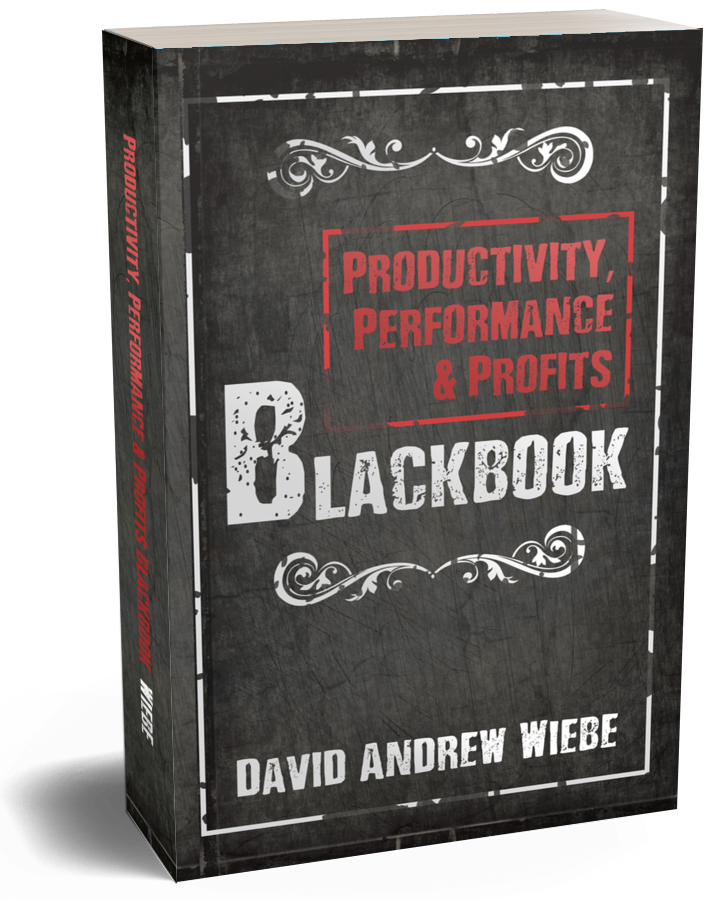
The ultimate guide to getting more done for artists. Get real results in productivity. get more done


 Why splurge on Beats or Bose when you can get comparable sound quality at a non-comparable price? And we mean non-comparable in a good way.